
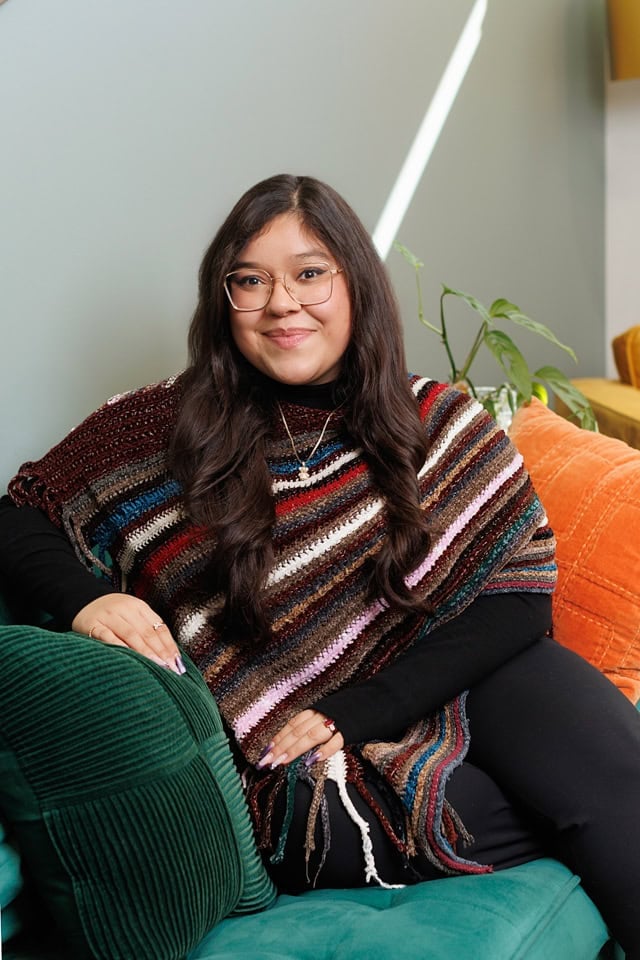
Kaylen Castaño
Specialities: Latine Identity, Stress and Anxiety, Body Dysmorphia
Modalities: Humanistic Therapy, Acceptance and Commitment Therapy (ACT), Dialectical Behavior Therapy (DBT), Cognitive Behavioral Therapy (CBT), and somatic practices
Population: Adolescents and Adults
Credentials: In Progress -Master’s Degree and Education Specialist Degree (Ed.S.) in Clinical Mental Health Counseling
I’m a bilingual Graduate Intern providing individual mental health counseling in Gainesville, Florida for adolescents and adults navigating anxiety, life transitions, identity exploration, body image concerns, chronic illness, and multicultural experiences. My work is rooted in a person centered and humanistic approach while integrating Acceptance and Commitment Therapy (ACT), Cognitive Behavioral Therapy (CBT), Dialectical Behavior Therapy (DBT), somatic practices, and creative or “geeky” approaches that are thoughtfully tailored to each person’s unique story. I am a mosaic of everyone I have loved, even for a heartbeat, and I believe the people who touch our lives shape the way we understand ourselves, our relationships, and the world around us. Therapy offers us the opportunity to slow down and make sense of those pieces with honesty and compassion, discovering which ones still support us and which ones we are finally ready to set down. As a second generation Latina from Central America, I approach counseling with warmth, curiosity, and deep respect for culture, identity, and lived experience. My hope is to create a space where you feel genuinely seen, where healing feels collaborative rather than prescriptive, and where our work together reflects not only your goals, but also the interests, strengths, values, and experiences that make you uniquely you.
What treatment areas do you specialize in?
I enjoy working with adolescents and adults experiencing anxiety, depression, stress, life transitions, self esteem concerns, relationship challenges, and identity exploration. I also have a special interest in supporting clients navigating body image concerns, weight stigma, chronic illness, medical trauma, and the emotional impact of living with long term health conditions. As a bilingual therapist in training, I especially enjoy working with members of the Latine community, first and second generation immigrants, and individuals exploring multicultural identities, family dynamics, and intergenerational trauma. I also welcome clients who connect with gaming, fandoms, and other creative communities, and I enjoy incorporating those interests into therapy when they are meaningful to the client’s healing.
Why did you choose to become a therapist?
Growing up as a second generation Latina from Central America, I saw firsthand how difficult it could be to access mental health care and how often conversations about emotional wellbeing were met with silence or stigma. Those experiences influenced the therapist I hope to be today. I chose this profession because I want to help create a space where people feel safe asking for support, especially those whose cultures, identities, or life experiences have made that feel difficult in the past.
At its heart, therapy is about human connection. I believe healing happens when people feel genuinely seen, heard, and understood. It is an honor to walk alongside clients as they make sense of their experiences, reconnect with their strengths, and move toward a life that feels more authentic to who they are.
What can a client expect to experience in session with you?
You can expect therapy to feel collaborative, compassionate, and tailored to you. My goal is to create a space where you feel safe enough to be honest, curious enough to explore, and supported enough to grow. I work from a person centered and humanistic approach, which means I believe you are the expert on your own life. My role is not to tell you who to be, but to walk alongside you as we better understand your experiences and move toward the life you want to build.
Sessions with me often involve slowing down, making connections between thoughts, emotions, behaviors, relationships, and even the ways our bodies respond to stress. Depending on your goals, I may integrate approaches such as ACT, CBT, DBT, somatic practices, and creative interventions. I also believe therapy should be tailored to the person, not the other way around. Whether your world is shaped by books, music, art, gaming, spirituality, fandoms, or another meaningful part of your identity, I enjoy incorporating the things that already help you make sense of yourself into our work together. My hope is that you leave each session feeling a little more understood, a little more grounded, and a little more connected to yourself than when you walked in.
What treatment tools and modalities do you use in your practice?
My work is grounded in a person centered and humanistic approach, which means I believe healing begins within a strong, collaborative therapeutic relationship. Rather than relying on a single model, I draw from evidence-based approaches that best fit each client’s goals, strengths, and lived experiences.
Depending on your needs, I may incorporate Acceptance and Commitment Therapy (ACT) to help you build psychological flexibility and live in alignment with your values, Cognitive Behavioral Therapy (CBT) to better understand patterns between thoughts, emotions, and behaviors, and Dialectical Behavior Therapy (DBT) to strengthen emotion regulation, distress tolerance, and interpersonal skills. I also integrate somatic practices to help clients reconnect with their bodies, along with multicultural counseling, liberation psychology, feminist psychology, and narrative approaches that honor identity, culture, and the stories we carry. I also enjoy incorporating creative approaches such as expressive arts, storytelling, and even games, fandoms, or other meaningful interests when they support your healing and make therapy feel authentic to you.
How do issues of Identity, Equity, and Justice influence your role as therapist?
Identity, equity, and justice are not separate from mental health. They are woven into how we experience the world, our relationships, and ourselves. As a bilingual Latina therapist in training, I strive to provide culturally responsive, inclusive, and person centered care that honors each client’s lived experiences rather than asking them to leave parts of themselves at the door. In our work together, I approach every client with cultural humility and genuine curiosity. I recognize that factors such as race, ethnicity, culture, immigration experiences, language, gender, sexuality, disability, body size, faith, socioeconomic status, and family systems can all influence mental health and the healing process. Rather than viewing these identities as background information, I see them as essential pieces of understanding your story.
I also believe that many struggles cannot be understood without considering the broader systems people live within. While therapy cannot change those systems overnight, it can create space to recognize their impact, reconnect with your strengths, and move toward healing in ways that feel authentic and empowering.
How do you believe change happens?
I believe meaningful change begins with awareness, but it grows through intention, action, and self compassion. Before we can choose a different path, we first have to understand the patterns, beliefs, relationships, and experiences that have impacted the one we are already walking. Therapy provides a space to explore those patterns with curiosity rather than judgment. I also believe change is rarely linear. Sometimes it comes from the choices we make, and sometimes it is asked of us through life’s unexpected challenges, transitions, or losses. My role is to help you build insight, strengthen your connection to yourself, and develop practical tools that support lasting growth. Together, we can identify what matters most to you and work toward a life that feels more authentic, intentional, and aligned with your values.
What is your go to coffee order?
I’m pretty easy to please when it comes to coffee! If it’s cold, a caramel frappé or iced coffee with a little cream and sugar is usually my go to. If it’s chilly outside, a simple hot coffee with milk and sugar is all I need.
What made you want to work at Arise?
Arise is a place that genuinely cares about both its clients and its clinicians. I was drawn to the warm, collaborative, and inclusive environment, where authenticity, compassion, and continued learning are encouraged. Being part of a team that values culturally responsive care, community, and individualized treatment has made Arise feel like a place where I can continue growing as a therapist while providing meaningful support to the people I serve; it feels like more than just a counseling practice. I’m grateful to be part of a team that shares my belief that every person deserves to feel seen, supported, and empowered in their healing journey.